
How it's made
How Footwear Is Made — Inside the DOING Factory
A step-by-step walkthrough of how shoes are made in our Quanzhou factory, from design and cutting to stitching, lasting, sole attachment, finishing and quality control — written from our own production floor.
People often picture a single machine that “makes a shoe.” The reality is more impressive: a finished pair passes through dozens of skilled operations. This walkthrough follows a shoe through our Quanzhou factory, stage by stage — written from our own production floor, not a textbook.
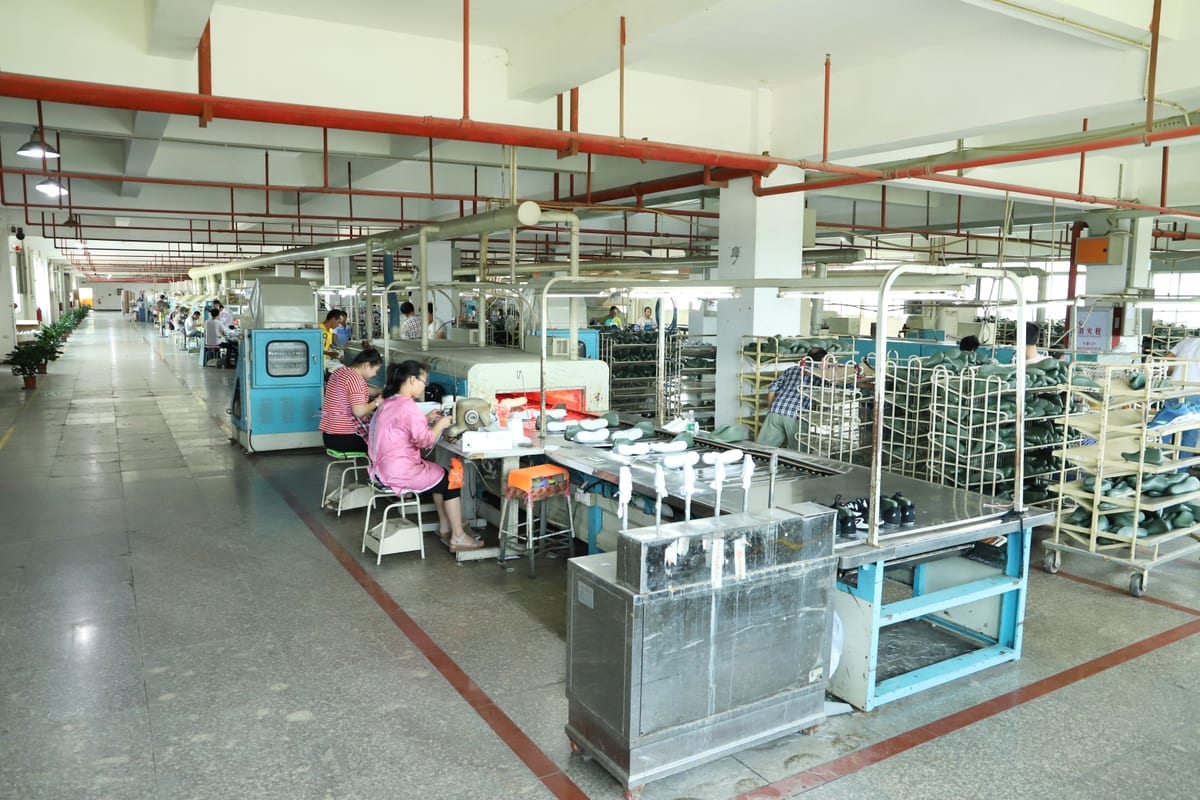
Stage 1 — Design, patterns and the last
Everything starts with a design and a last — the foot-shaped form a shoe is built around. The last defines fit, volume and toe shape, so getting it right is the foundation of the whole shoe. From the approved design we develop graded patterns (the 2D shapes for every panel, in every size) and a tech pack that tells the factory exactly what to cut, stitch and assemble.
This is where OEM and ODM diverge: with OEM you bring the design and patterns; with ODM our development team creates them with you.
Stage 2 — Cutting
The upper materials — leather, synthetics, mesh, linings, foams — are cut into panels. Cutting direction matters: materials stretch differently along and across the roll, so panels are cut in the right orientation to control fit and avoid distortion. We check cut layers, direction and, for materials like suede, that the colour and nap match across the pair.
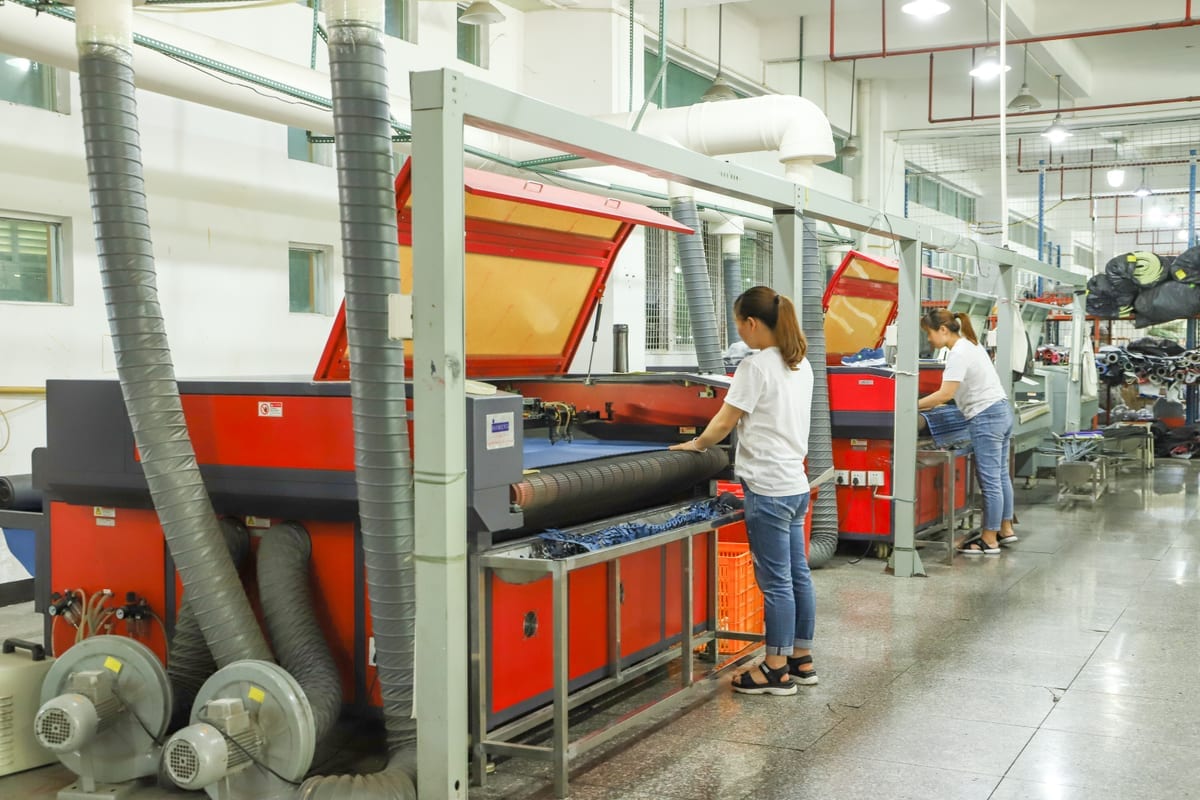
More detail: Cutting & stitching the upper →
Stage 3 — Stitching the upper
The cut panels become a 3D upper at the stitching line. Skiving thins edges so they fold cleanly; panels are stitched with controlled stitch density and edge distance; reinforcement tape protects stress points; and overlays, logos and eyelets go on. The first stitched upper of each style and colour is lasted as a “first article” and checked against the approved sample before the line runs — catching a pattern problem here saves the whole order.
Stage 4 — Preparing the bottom
While the upper is built, the bottom components are prepared: the insole board, any midsole, the footbed, and the outsole (moulded in rubber, EVA, TPR or PU). For custom styles this is where new outsole moulds and tooling are made. Each component is checked against spec — sole length and width against the last, hardness, and colour matching across the pair.
Stage 5 — Lasting and sole attachment
This is the heart of shoe assembly. The upper is pulled tight over the last and shaped — lasting — so it takes the last’s form. Then the upper and sole are joined. The construction used here defines the shoe:
- Cement (glued) — upper and sole bonded with adhesive; the most common, versatile method.
- Vulcanized — rubber sole cured to the upper under heat; the classic court-sneaker look.
- Injection — sole moulded directly onto the upper.
- Strobel — upper stitched to a fabric sole base, then a sole attached; common in athletic shoes.
We check that the bond is fully closed with no gaps, that glue is clean, and that the shoe sits straight and symmetrical.
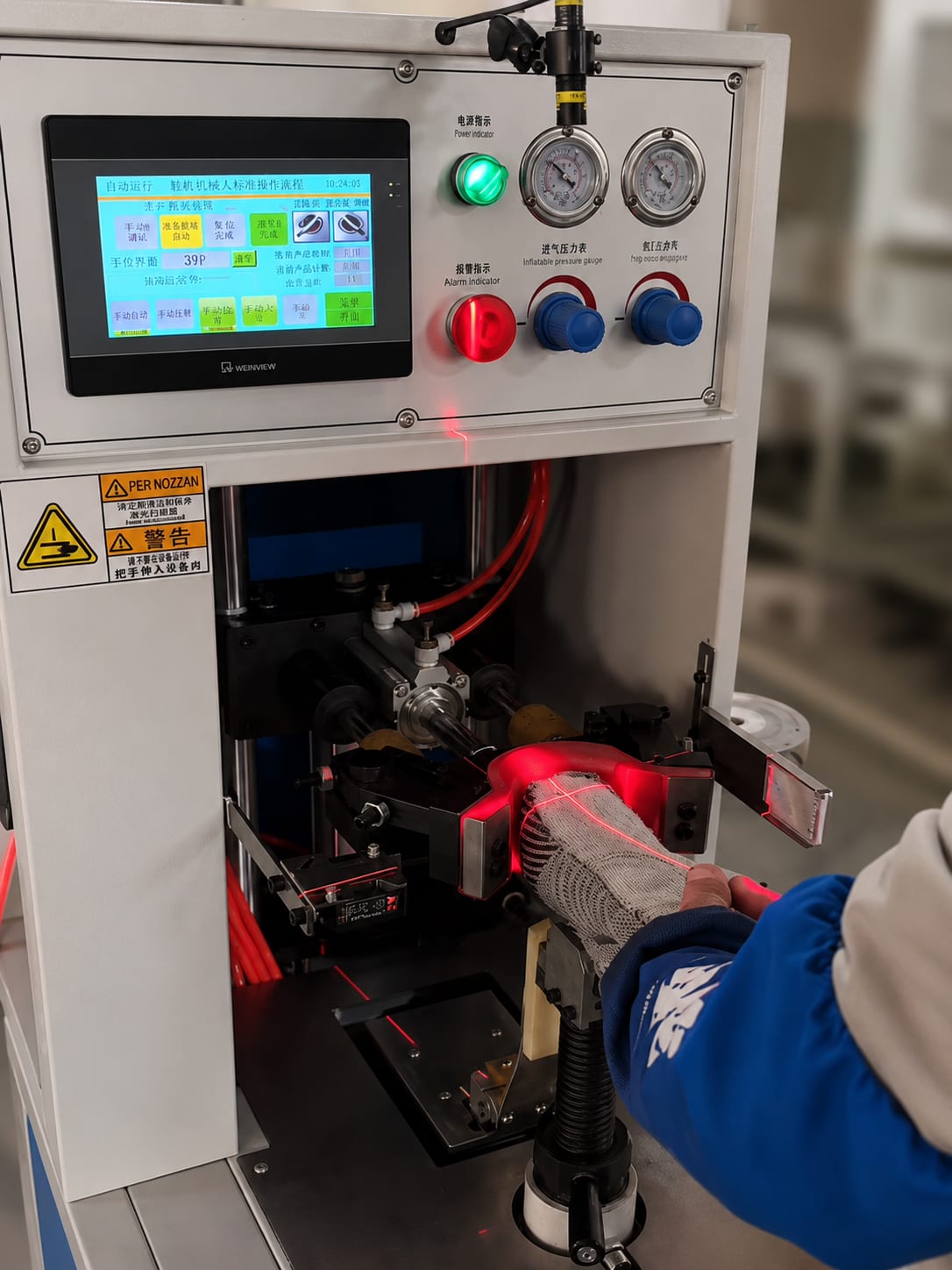
More detail: Lasting & assembly → · Outsole construction methods →
Stage 6 — Finishing
The shoe is cooled, the last removed, and the pair is finished: laces and footbeds inserted, threads trimmed, surfaces cleaned, and any treatments applied. For waterproof footwear, this is also where the construction is sealed and tested.
Stage 7 — Quality control and packing
Quality is controlled throughout — incoming materials, in-line checks, and a final inspection — then packed. We inspect to an agreed AQL standard with a graded defect classification before any shipment leaves. See our testing & quality standards and factory & QC.
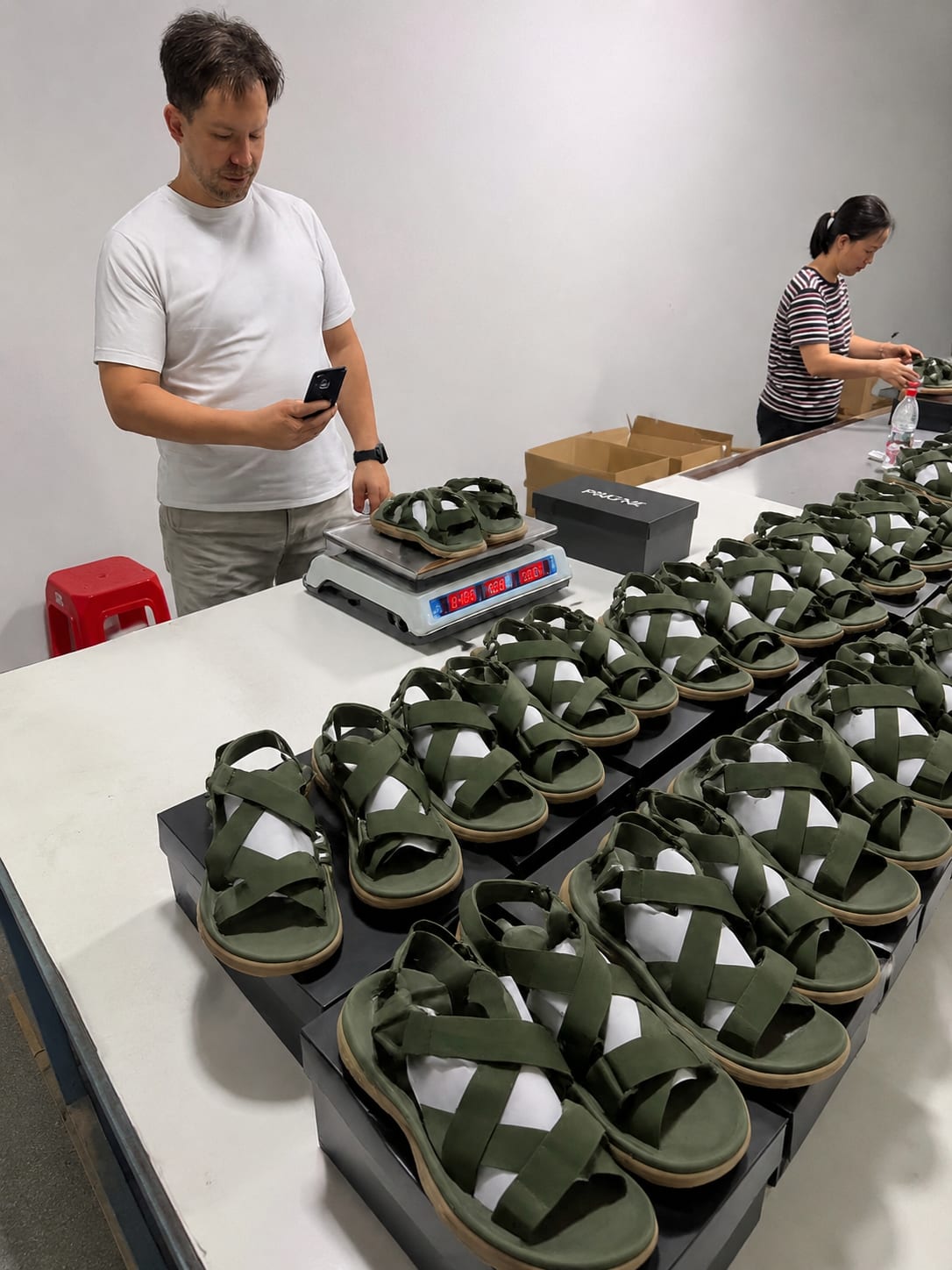
Why it matters when you choose a factory
Every one of these stages is a place where quality is either built in or lost. A partner who controls all of them — development, cutting, stitching, lasting, sole attachment and QC — gives you consistency that’s hard to get when production is scattered. That end-to-end control is what DOING brings as a trading & manufacturing partner.
Want to develop a shoe with us? Tell us your project and we’ll walk you through every stage.
Frequently asked questions
How long does it take to make a shoe?
From an approved design, samples take 2–4 weeks and bulk production 30–60 days. A single pair passes through dozens of operations across cutting, stitching, lasting, sole attachment, finishing and quality control.
What are the main stages of shoe manufacturing?
The core stages are design and patterns, cutting, stitching the upper, preparing the bottom (lasts, insoles, outsoles), lasting and sole attachment, finishing, and quality control with packing.
Do all shoes use the same construction?
No. The upper-to-sole construction differs by product — cement (glued), vulcanized, injection and strobel are the most common. Each suits different styles, performance needs and price points.
Sourcing footwear from China?
DOING is a footwear trading & manufacturing partner — OEM/ODM, development, QC and export. Tell us your product, market and MOQ.
Get a Quote